Ben Huang
ECE & Physics at UC Berkeley - machine learning, GPU systems, and backend engineering.
I'm Ben, an Electrical and Computer Engineering and Physics student at UC Berkeley. I've fine-tuned vision-language models to draft traffic control plans, built agentic test generation for FPGA designs, co-developed a GPU kernel-fusion system at CMU that cut LLM inference latency 6.7×, and shipped a production FastAPI backend on AWS. I like problems where the modelling and the engineering both have to be right for the thing to work at all. Currently looking for software engineering internships.
Skills
Languages
Machine Learning & AI
Backend & Infrastructure
Experience
-
Machine Learning Engineer
Traffic Patterns / Open Project
- Architecting CloudTCP, a web platform that turns a user-placed work zone on aerial imagery into an engineer-quality Traffic Control Plan using computer vision and a rules-driven layout engine.
- Fine-tuning a Gemini vision-language model on 500+ historical TCPs to generate vectorized traffic control layouts from road geometry and work-zone parameters.
- Designing a deterministic rules engine that encodes MUTCD and Caltrans spacing, taper, and buffer tables to validate every generated plan against published standards.
-
FPGA Engineering Intern
ChipChop at SkyDeck
- Designed an agentic test-generation system for chip designs that turns natural-language specifications into executable test sequences.
- Built custom simulation tools and functional/port coverage skills using Icarus Verilog and reflection loops that iterate on coverage results until the spec is met.
- Raised functional coverage to 97.7% and port coverage to 99.9% on large FPGA designs with 100+ modules.
-
Agentic AI Software Engineer
IBM / Open Project
- Designed and deployed a multi-agent system for IBM's internal education platform on IBM Granite, coordinating specialized agents to deliver personalized learning content to IBM engineers.
- Architected the agent control flow with tool use, structured output, reflection loops, and a retrieval-augmented generation pipeline over IBM technical documentation.
-
Lead Backend Engineer
Behn Meyer / Open Project
- Architected and deployed a FastAPI backend serving REST endpoints for a production agricultural e-commerce mobile app - PostgreSQL with Redis caching, on AWS EC2 behind an Application Load Balancer.
- Implemented OAuth 2.0 authentication and role-based access control via Auth0, with JWT token validation across multiple user roles.
- Designed a horizontal scaling strategy - Redis caching, read replicas, and sharding - to support 10,000+ concurrent users at sub-200 ms p95 API latency.
-
GPU Kernel Optimization Researcher
Catalyst Group, Carnegie Mellon University
- Co-developed MPK, a high-performance computing system that fuses GPU operations into a single execution pass, reducing LLM inference latency by 6.7×.
- Implemented fused GPU operators that merge sequential operations into single kernels, keeping intermediates on-chip.
- Engineered optimizations for production-scale ML systems, reducing memory overhead and improving throughput across distributed workloads.
Education
-
University of California, Berkeley
B.S. Electrical and Computer Engineering · B.A. Physics • GPA 3.91
Relevant coursework
Projects
-
dropper.ai(opens in a new tab) 2026 Best Solo Hack · DiamondHacks 2026
A storefront reviewer that helps small businesses compete online through price scraping and automated site navigation.
Built solo at DiamondHacks 2026. dropper.ai does two things: it scans a store for accessibility and UX problems - a Browser Use agent walks the site while a Chrome extension highlights each issue in-page and produces a scored report - and it finds competitors, dispatching agents to scrape similar stores and compare prices, shipping, and deals. Gemini agents were fine-tuned with BrowserUse to navigate DOM trees efficiently so scraping holds up at scale. Python and FastAPI on the backend, a Next.js frontend, and the extension on top.
-
DECODE(opens in a new tab) 2025 2nd Place · QBI Hackathon 2025
Predicts the strength of protein–ligand interactions and drug–protein binding efficacy with transformers and feed-forward networks.
DECODE was trained on the BindingDB dataset - over 600,000 measured inhibitory effects of drugs on proteins - and uses Evo2, a genome-scale sequence foundation model, alongside feed-forward heads to score how strongly a candidate compound binds its target. Building on a foundation model that size at hackathon pace meant most of the work sat in the data path: getting sequences into the right representation, fitting inference into the available GPU memory, and turning raw model outputs into a number a biologist can act on. Took 2nd place at the 2025 QBI Hackathon.
-
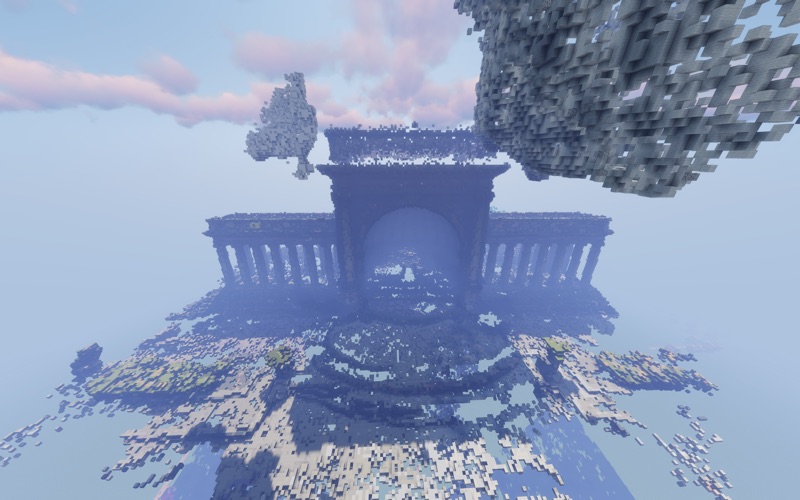
Worldcraft(opens in a new tab) 2025
Turns ordinary photographs into playable Minecraft worlds using computer vision and neural radiance fields.
Worldcraft runs a four-stage pipeline: semantic segmentation with Mask2Former labels the scene, Nerfstudio trains a NeRF to recover 3D structure, the resulting point cloud is voxelized, and each voxel is mapped to a Minecraft block. The interesting part is bridging continuous neural geometry with a hard voxel grid - segmentation labels carry through the reconstruction so the final world keeps materials that match the original scene.
-
WattVision(opens in a new tab) 2026
Scan your home appliances with on-device AI to track energy usage and catch ghost power drain.
Built at SF Hacks 2026, WattVision pairs a TypeScript React Native and Expo client with a Python FastAPI backend, running appliance recognition on-device so a scan works without shipping camera frames to a server. One codebase ships to web, Android, and iOS, and identified appliances are turned into an energy picture that surfaces the always-on loads people never think to look for.
-
GPGraph: GPU Graph Processing(opens in a new tab) 2025
A CUDA library that moves classic graph algorithms onto the GPU for high-throughput processing.
GPGraph stores graphs in compressed sparse row (CSR) form and implements breadth-first search and single-source shortest path - both Bellman-Ford and Dijkstra - as data-parallel CUDA kernels rather than pointer-chasing CPU loops. It builds with CMake against CUDA 11+, exposes a small C API (
gpInit,gpCreateGraphCSR, …), and has optional pybind11 Python bindings. Work on a library like this lives and dies on memory behaviour: coalesced access over the adjacency structure, low thread divergence on irregular neighbour lists, and balanced work across warps when vertex degrees are skewed. -
Hashrate Mining Optimizer(opens in a new tab) 2025
A reinforcement learning system that predicts and allocates mining hashrate from operational data.
Built at the 2025 MARA hackathon, the project frames hashrate allocation as a sequential decision problem: an agent trained on historical hashrate data observes operating conditions and learns a policy for how much power to commit, rather than reacting with fixed thresholds. Mining is a natural fit for RL because the trade-off between energy cost and yield shifts continuously, so a learned policy can adapt where static heuristics cannot. A Streamlit and Plotly dashboard streams the model’s predictions and confidence in real time.

Contact
I'm always happy to talk about interesting engineering problems, internships, or new-grad roles. The fastest way to reach me is email.